
What is Japan's newly introduced planned interactive hearing for patent invalidation trials?
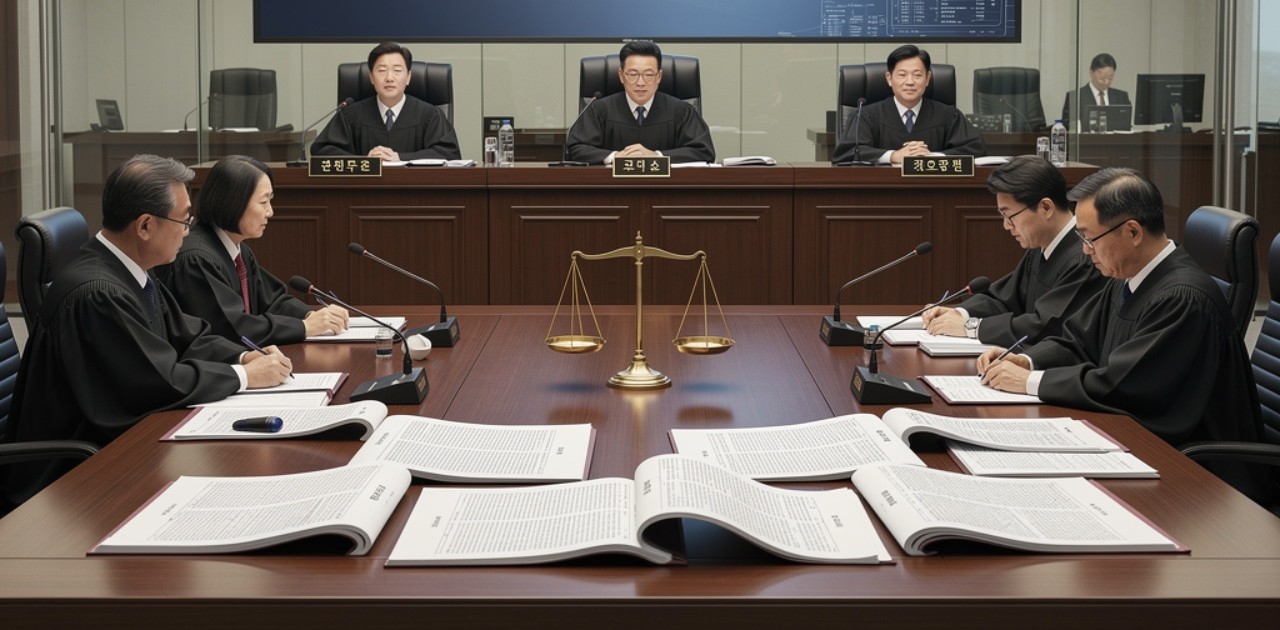
- From April 2020, Japan begins operating the planned interactive hearing within patent invalidation trial requests -
- Growing need for advance preparation regarding patent invalidation trial requests -
The Japan Patent Office (hereinafter JPO) defines a trial as "a higher-level review of the examination, serving the role of re-examining the determination made by the examiner, or the role of promoting the early resolution of disputes surrounding the validity of industrial property rights." The JPO is implementing various measures to fully carry out these roles and to secure highly reliable trial decisions, and from April 2020 it began operating the "planned interactive hearing (oral hearing)" within patent invalidation trials. This article examines the recent changes to Japan's patent invalidation trial and considers response measures for our companies.
What is Japan's patent invalidation trial?
It is a system under which an invalidation trial can be requested to render a patent unobtainable. In Japan, the targets of a patent invalidation trial are as follows.
1. Where it involves a foreigner not granted reciprocity by an interested party or an examiner
2. Where the patent requirements are not met
3. Where it is an invention for which a patent cannot be granted
4. Where another person filed an earlier application for the same invention
In Japan, a patent invalidation trial can be requested at any time regardless of the patent publication gazette date, but only an interested party (a person who suffered direct or indirect harm from the patent, or who made a similar invention or an identical product, etc.) may request it. When the trial request document is received from the petitioner, the trial request headquarters sends a notice to the respondent. The respondent must send a response document by the deadline set by the trial request headquarters. If, based on the respondent's response document, an agreement is reached with the petitioner, the patent invalidation trial is terminated. However, if no agreement is reached, the trial decision proceeds through the planned interactive hearing. The trial decision results are divided into an invalidation decision or a maintenance decision. If a party is dissatisfied with the decision, the case is transferred to the Intellectual Property High Court, where a trial decision cancellation suit can be pursued.
The trend in the number of patent invalidation trial requests in Japan declined somewhat from 159 cases in 2018 to 112 cases in 2019, a decrease of 47 cases or about 3.38% year on year. However, there are many reasons for concern in neglecting information related to patent invalidation trial requests on the grounds of this downward trend. This is because the economic and time losses that arise from being caught up in litigation even once cannot be ignored.
In this regard, through the advice of KOTRA Tokyo Trade Office's advisory patent attorney firm (ITOH INTERNATIONAL PATENT OFFICE), we aim to examine the content and necessity of the changes to Japan's patent invalidation trial operation.
Content and necessity of the changes to Japan's patent invalidation trial operation ITOH INTERNATIONAL PATENT OFFICE Since last month, the Japan Patent Office (JPO) has been operating the planned interactive hearing system in patent invalidation trials. Below, we introduce the planned interactive hearing system, which was established to strengthen focused hearings. 1. Target cases and procedural requirements In other words, even if the chief administrative judge recognizes the necessity of a party's request, the planned interactive hearing will not be established if the requesting party's counterpart does not consent, or even if the chief administrative judge judges it on his/her own authority, if either party does not consent. 2. Purpose and operational content
In the planned interactive hearing introduced this time, before conducting a full-scale oral hearing, both parties and the trial panel gather privately (also possible remotely, non-face-to-face) and, for example, ① decide the hearing schedule at the time the duplicate copy of the trial request document is served on the respondent, ② organize the issues at the time the duplicate copy of the response document is served on the petitioner, and ③ thereafter make a final confirmation of the issues, thereby efficiently narrowing down the issues through planned dialogue.
3. Comment
|
Implications
Among invalidation trials related to intellectual property rights, the number of patent invalidation trials is not large. However, there is a point our companies must absolutely pay attention to. Even if an invalidation decision or a maintenance decision is issued through the planned interactive hearing, a trial decision cancellation suit accompanied by a cancellation/correction request can be filed. Moreover, even if the content of a correction request can be accepted by the patent court, there is always a possibility that the judgment will be overturned at the Supreme Court.
For this reason, when our companies file a patent in Japan, they must prepare not only for managing the completion of the application and the registration, but also for patent invalidation litigation and the like. At the stage of drafting the specification (the document prepared to claim a patent for a specific invention), it is necessary to thoroughly prepare the experimental conditions that can clearly prove the inventive step of the invention and the content of the invention. In addition, since Japan's patent law may undergo changes every year, it is necessary to pay attention to the latest information related to Japanese IP and to accurately familiarize oneself with the changes.
Source : Japan Patent Office, ITOH INTERNATIONAL PATENT OFFICE advisory content, and KOTRA Tokyo Trade Office compilation
< Copyright holder ⓒ KOTRA & KOTRA Overseas Market News >
For the KOTRA work (What is Japan's newly introduced planned interactive hearing for patent invalidation trials?), it may be used under the conditions of "Korea Open Government License Type 4: Attribution + No Commercial Use + No Derivatives." However, photographs and images may not be used as their copyright belongs to third parties.